
Views: 0 Author: Site Editor Publish Time: 2026-05-15 Origin: Site


A dredging pump is the core power component in modern dredging systems, responsible for transporting a mixture of water, sand, mud, gravel, and other sediments through pipelines. It is widely used in river dredging, mining slurry transport, port construction, and land reclamation projects.
Unlike standard water pumps, a dredging pump is specifically engineered to handle high-solid-content slurry under continuous abrasive conditions. Understanding its working principle helps operators improve efficiency, reduce wear, and optimize dredging performance.
ITECH Co.,Ltd. supplies professional dredging pumps and slurry transport systems for global dredging and mining applications.
Email: info@itechdredge.com
A dredging pump is a heavy-duty centrifugal pump designed to move dense slurry mixtures containing solid particles.
It is typically used in:
Cutter suction dredgers
Excavator-mounted dredging systems
Booster pump stations
Mining slurry pipelines
Industrial sediment transport systems
The key difference from a standard pump is its ability to handle:
High abrasion
High solid concentration
Long-distance transport conditions
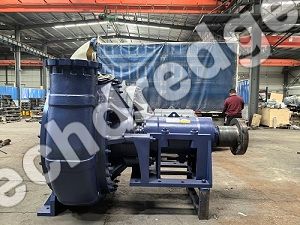
A dredging pump is built with reinforced components designed for harsh environments.
Impeller
Pump casing
Suction inlet
Discharge outlet
Wear liners
Shaft and bearing system
Sealing system
Each part is optimized to resist erosion caused by sand and gravel particles.
The working principle of a dredging pump is based on centrifugal force and continuous slurry flow.
The dredging system first loosens underwater material using a cutter head or excavation device. The mixture of water and sediment enters the pump through the suction inlet.
The slurry typically contains:
Water
Sand particles
Mud and clay
Gravel fragments
Inside the pump, a high-speed rotating impeller generates centrifugal force.
This force:
Pushes slurry outward from the center
Increases fluid velocity
Converts mechanical energy into hydraulic energy
The impeller is the main energy transfer component in the system.
As slurry moves outward, it enters the pump casing where velocity is converted into pressure.
This pressure is what allows slurry to be transported through long pipelines.
The casing is designed to:
Guide flow direction
Minimize turbulence loss
Withstand abrasive impact
Once pressure is generated, the slurry is discharged through the outlet pipe into:
Floating pipelines
Land-based pipelines
Booster pump systems (if required)
The material is transported to:
Disposal areas
Sand stockpiles
Processing plants
Tailings ponds
The dredging pump operates continuously as long as:
Slurry is supplied
Power system is stable
Pipeline flow remains unblocked
This allows uninterrupted dredging operations in large-scale projects.
| Stage | Function |
|---|---|
| Suction | Slurry enters pump |
| Acceleration | Impeller increases velocity |
| Pressurization | Energy converted to pressure |
| Discharge | Slurry enters pipeline |
| Transport | Material delivered to target area |
Different impeller shapes affect:
Flow rate
Solid handling capacity
Wear resistance
Common materials include:
High chrome alloy
Anti-abrasive cast iron
Rubber-lined casings
Material choice directly impacts service life.
Higher solid content increases:
Pump load
Wear rate
Energy consumption
Proper slurry control improves efficiency.
Long pipelines or narrow diameters increase:
Pressure loss
Energy consumption
Pump wear
Higher rotation speed increases:
Flow rate
Output capacity
Mechanical wear
Operates underwater
Direct sediment handling
Used in mining and pond dredging
Installed on dredgers or land systems
Suitable for long-distance transport
Connected to hydraulic excavators
Highly mobile for river projects
Increases pipeline transport distance
Used in large-scale dredging operations
| Feature | Hydraulic System | Electric System |
|---|---|---|
| Mobility | High | Medium |
| Energy Cost | Higher | Lower |
| Maintenance | Medium-High | Medium |
| Remote Operation | Better | Limited |
| Continuous Operation | Good | Excellent |
Electric systems are often preferred in fixed industrial sites, while hydraulic systems are widely used in mobile dredging projects.
Removes sediment buildup and improves water flow.
Extracts and transports sand materials efficiently.
Handles slurry transport in mining operations.
Maintains navigable water channels.
Supports hydraulic filling projects.
Can transport mixtures of water and heavy sediment.
Designed for long-duration industrial use.
Works with pipeline systems for extended reach.
Built for harsh environments containing sand and gravel.
Dredging pumps experience continuous wear due to abrasive slurry.
Impeller replacement
Liner inspection
Seal system maintenance
Bearing lubrication
Using high-chrome wear-resistant materials significantly improves lifespan.
ITECH Co.,Ltd. provides customized dredging pump systems based on project requirements.
| Custom Option | Available Solution |
|---|---|
| Pump Type | Submersible / horizontal |
| Material | High chrome alloy |
| Capacity | Small to industrial scale |
| Power System | Hydraulic or electric |
| Application | River, mining, slurry transport |
ITECH Co.,Ltd. specializes in dredging pump manufacturing and slurry transport engineering solutions.
Professional dredging system design
Hydraulic and electric pump solutions
Wear-resistant pump technology
Custom engineering support
Global export capability
Technical service and maintenance guidance
We support mining companies, dredging contractors, and industrial slurry transport projects worldwide.
It transports slurry mixtures containing water and solid particles through pipelines.
Through centrifugal force created by a rotating impeller.
Yes, heavy-duty pumps are designed for sand, gravel, and mining tailings.
Abrasive particles in slurry gradually wear internal components.
It increases pressure for long-distance slurry transport.
Yes, capacity, material, and configuration can be tailored.
If you want to understand the dredging pump working principle, knowing its engineering process helps improve equipment selection, efficiency, and long-term operational performance.
ITECH Co.,Ltd. provides professional dredging pumps and customized slurry transport solutions for river dredging, mining, and industrial applications worldwide.
dredging pump working principle, dredging pump explanation, slurry pump system, centrifugal dredging pump, submersible dredging pump, mining slurry pump, ITECH Co.,Ltd.

