
Views: 0 Author: Site Editor Publish Time: 2026-05-23 Origin: Site


Dredging capacity refers to the amount of material a dredging system can excavate and transport within one hour. It is usually measured in cubic meters per hour (m³/h).
This value is one of the most important indicators when selecting dredging equipment because it directly affects:
Project efficiency
Fuel consumption
Equipment size
Construction timeline
Overall project cost
For example, a dredger with a capacity of 1,000 m³/h can theoretically move 1,000 cubic meters of slurry material per hour under standard working conditions.
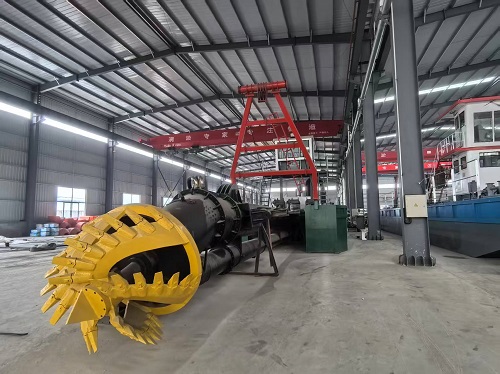
Choosing the correct dredging capacity helps project owners avoid common operational problems.
A dredger with insufficient capacity may lead to:
Slow project progress
Increased labor costs
Longer equipment working hours
Higher fuel consumption
Meanwhile, oversized dredging equipment may increase unnecessary investment and operational expenses.
Proper dredging capacity calculation helps balance:
Productivity
Investment cost
Energy efficiency
Equipment lifespan
The simplified dredging capacity formula is:
Dredging Capacity (m³/h) = Flow Rate × Slurry Concentration
Or more specifically:
Q = q × c
Where:
Q = Actual solid output (m³/h)
q = Total slurry flow rate (m³/h)
c = Solid concentration percentage (%)
Suppose a dredging pump transports:
Slurry flow rate: 2,000 m³/h
Solid concentration: 20%
Then:
Actual Dredging Capacity = 2,000 × 20% = 400 m³/h
This means the dredger is moving approximately 400 cubic meters of solid material per hour.
Several operational conditions influence real dredging performance.
Higher solid concentration generally increases production efficiency.
However, excessively high concentration may:
Increase pipe blockage risk
Accelerate pump wear
Reduce system stability
The pump’s flow capacity determines how much slurry can be transported.
Larger dredge pumps usually support:
Higher discharge volume
Longer transportation distance
Greater excavation depth
Different materials affect dredging efficiency differently.
| Material Type | Difficulty Level |
|---|---|
| Fine silt | Low |
| Mud | Low |
| Sand | Medium |
| Gravel | High |
| Clay | High |
Heavy materials require stronger pumps and cutter systems.
Longer pipeline distances reduce effective dredging capacity due to friction loss.
Factors include:
Pipe diameter
Elevation difference
Pipeline bends
Pump pressure
Deeper dredging projects place more demand on:
Suction power
Pump pressure
Cutter head efficiency
This can reduce production if equipment is undersized.
Manufacturers often provide theoretical dredging capacity, but real working performance may vary.
Actual dredging output is usually affected by:
Weather conditions
Operator experience
Material hardness
Maintenance condition
Pipeline efficiency
Actual production is often lower than laboratory or factory values.
| Dredger Type | Typical Capacity Range |
|---|---|
| Small cutter suction dredger | 100–500 m³/h |
| Medium dredger | 500–2,000 m³/h |
| Large industrial dredger | 2,000–6,000+ m³/h |
| Mini dredger | Below 100 m³/h |
The suitable model depends on project size and material conditions.
Several strategies help increase actual dredging capacity.
Maintain stable solid content without overloading the system.
Use appropriate:
Pipe diameter
Shorter pipeline routes
Fewer sharp bends
Pump performance should match:
Material type
Transportation distance
Project depth
Replace worn:
Impellers
Liners
Cutter teeth
Seals
Worn components reduce pumping efficiency significantly.
Maximum theoretical output may not reflect real site performance.
Sand, gravel, and clay require different equipment configurations.
Small pipelines increase resistance and reduce production.
Abrasion directly affects long-term capacity stability.
ITECH Co.,Ltd. provides professional dredging equipment and customized project solutions for global customers.
Our product range includes:
Cutter suction dredgers
Dredge pumps
Sand mining equipment
Amphibious dredgers
Booster pump stations
Floating pipeline systems
We help customers select suitable dredging capacity according to:
Project conditions
Material type
Working depth
Transportation distance
Budget requirements
Not necessarily. Oversized equipment may increase operational costs unnecessarily.
Many dredging systems operate efficiently between 15%–30% solid concentration.
Real working conditions, pipeline losses, and material characteristics affect actual performance.
You should calculate:
Material density
Working hours
Pump flow rate
Pipeline distance
Excavation depth
Yes. Dredgers can be configured according to project requirements.
Understanding dredging capacity (m³/h) is essential when selecting dredging equipment or planning excavation projects.
Correct capacity calculation helps improve:
Project efficiency
Fuel economy
Equipment lifespan
Operational stability
By considering slurry concentration, material type, pipeline distance, and pump performance, project owners can select a more suitable dredging solution.
For customized dredging equipment and technical support, ITECH Co.,Ltd. provides professional solutions for river dredging, sand mining, lake cleaning, and marine engineering projects.
ITECH Co.,Ltd.
Email: info@itechdredge.com
What Is Dredging Capacity, dredging capacity calculation, dredging capacity m3/h, cutter suction dredger capacity, dredge pump flow rate, dredging productivity calculation, dredging equipment supplier, ITECH Co.,Ltd.

